

PhoneStar Technical Data
PhoneStar TRI Technical Data
PhoneStar soundproofing board has been rigorously assessed by various European laboratories and it has a European Technical Approval – ETA 20/0371 – ensuring compliance with Technical Guidance Document E (ROI) and Technical Booklet G (NI) Building Regulations for Sound.
| Data | Measurement | Verification |
|---|---|---|
| European Technical Approval | 20/0371 | ETA |
| L x W x D | 1200 x 800 x 15 mm | ETA |
| Area | 0.96 m² | ETA |
| Weight | 18 ± 1.5 kg/m² | ETA |
| Density | 1200 ± 100 kg/m³ | ETA |
| Airborne Sound Insulation | Rw (Ctr) = 38dB (-5 Ctr) | EN ISO 717-1 |
| Impact Sound Reduction | ΔLw = 22dB | EN ISO 717-2 |
| Reaction to Fire Classification | Class E | BS EN 13501-1 |
| Thermal Conductivity | 0.17 W/mK | DIN EN 12664 |
| Vapour Resistance Factor | 14 µ | EN ISO 12572 |
| Sd Value | ca. 0.2 m | DIN EN 12572: 2001 |
| Distributed Load | 5 kN/m² | DIN EN 1991-1-1NA |
| Concentrated Load | 4 kN | DIN EN 1991-1-1NA |
| Flexural Strength - Lengthwise | ≥4.8 N/mm² | DIN EN 520 |
| Flexural Strength - Widthwise | ≥2.8 N/mm² | DIN EN 520 |
| Compressive Strength @ 5% Strain (δ5) | ≥1000 kPa | DIN EN 826 |
| Compressive Strength (δm) | ≥1000 kPa | DIN EN 826 |
PhoneStar TRI Acoustic Results on Various Structures
Airborne Sound Insulation
The Airborne Sound Insulation result, Rw, as shown below, is the Weighted Sound Reduction Index in decibels (dB). It describes the airborne sound-insulating power of a particular building element such as walls, floor/ceiling and ceiling/roof structures. The higher the decibel number, the better the airborne acoustic insulation performance. It is characterised by the difference in noise level on each side of a wall, floor or ceiling. This is a laboratory result measured over the frequency range of 100 to 3150 Hertz so the element has been tested in isolation without on-site routes of sound transmission being included. Rw (Ctr) adjusts the Rw figure by including a low-frequency Correction Factor (Ctr). If an airborne result is expressed as DnT,w then this test was carried out on-site, rather than in a laboratory, so flanking sound transmission is included. Airborne noise (speech, music etc) can only be significantly reduced by the addition of a dense product with high mass, but it must also be soft. Decoupling of materials greatly improves the results. The elements must also be well sealed.
Impact Sound Insulation
Testing was conducted across various structures in the Sound Research Laboratory (SRL). The materials for each system and the results achieved are detailed below.
Solid Timber Joist Floor
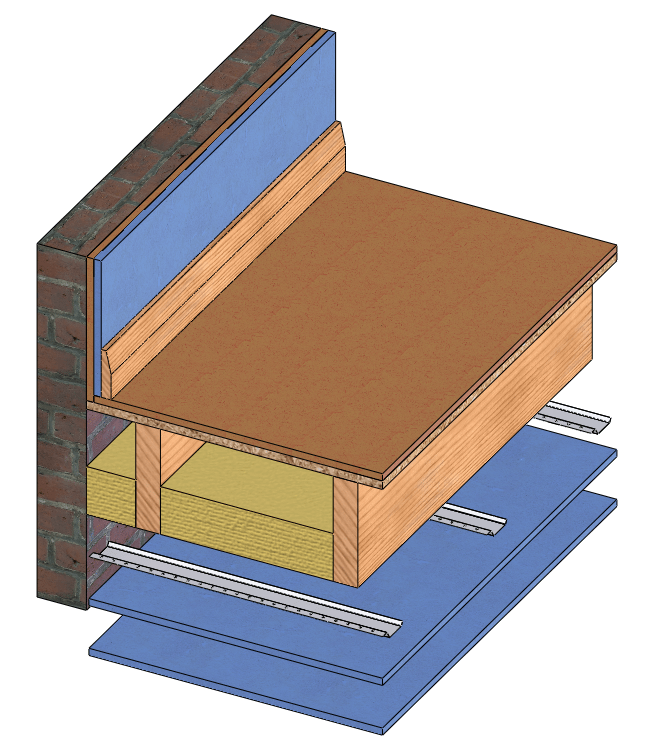
| Construction | Airborne Rw (Ctr) | Impact Ln,w |
|---|---|---|
| • 18mm OSB Top-deck | 60 (-6) dB | 53 dB |
| • 15mm PhoneStar TRI | ||
| • 18mm OSB Sub-deck | ||
| • 235mm Solid Timber Joists | ||
| • 100mm Mineral Wool Insulation (10 kg/m³) in Cavity | ||
| • 16mm Resilient Bars (RB1) | ||
| • 2 x 15mm Plasterboard | ||
| • Without OSB Top-deck | 59 (-6) dB | 56 dB |
Timber I-Joist Floor
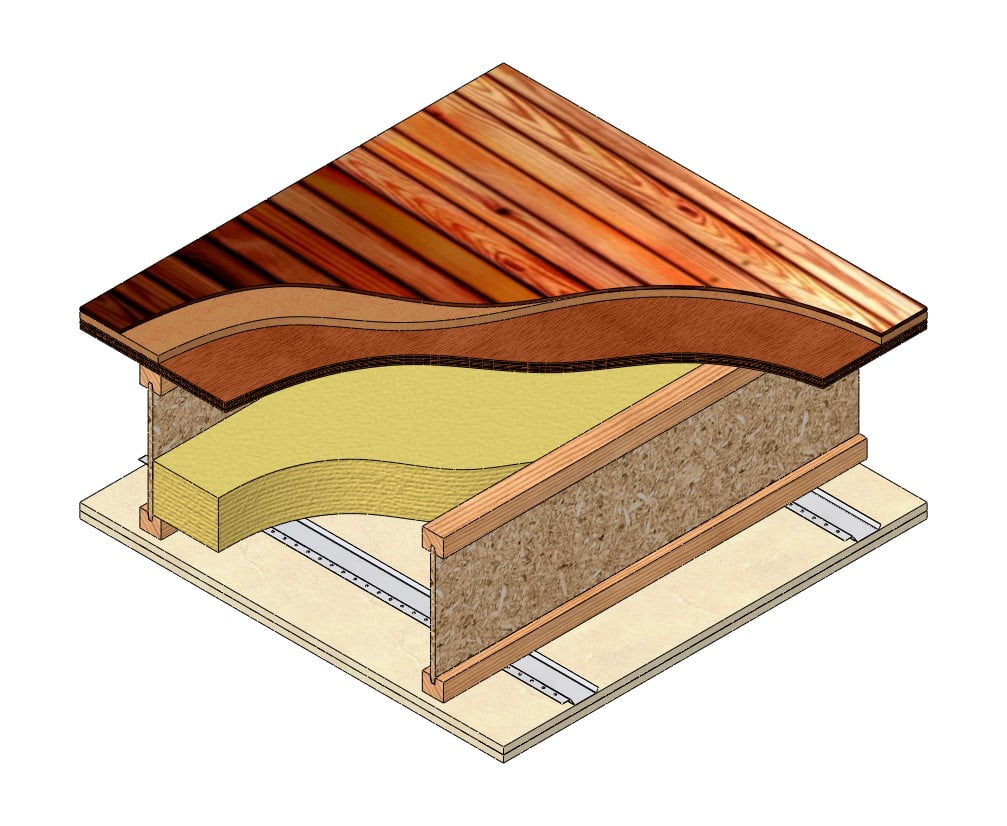
| Construction | Airborne Rw (Ctr) | Impact Ln,w |
|---|---|---|
| • 18mm OSB Top-deck | 60 (-7) dB | 55 dB |
| • 15mm PhoneStar TRI | ||
| • 18mm OSB Sub-deck | ||
| • 300mm Timber I-Joists | ||
| • 100mm Mineral Wool Insulation (45 kg/m³) in Cavity | ||
| • 16mm Resilient Bars (RB1) | ||
| • 2 x 15mm Plasterboard | ||
| • Without OSB Top-deck | 58 (-8) dB | 57 dB |
Solid Masonry Wall
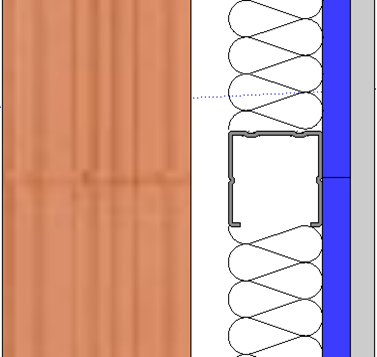
| Construction | Airborne Rw (Ctr) | Impact Ln,w |
|---|---|---|
| • 115mm Lightweight Clay Block Wall with 15mm Plaster on both sides | 66 (-7) dB | - |
| • 10mm Air Gap | ||
| • 50mm Metal C-Stud System | ||
| • 40mm Mineral Wool Insulation (40 kg/m³) in Cavity | ||
| • 15mm PhoneStar TRI | ||
| • 12.5mm Standard Plasterboard |
*Tested in Czech Technical University, Prague
Metal Stud Wall
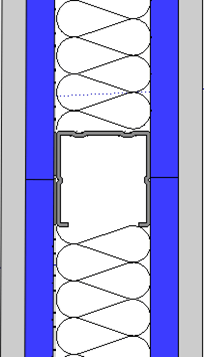
| Construction | Airborne Rw (Ctr) | Impact Ln,w |
|---|---|---|
| • 12.5mm Standard Plasterboard | 59 (-11) dB | - |
| • 15mm PhoneStar TRI | ||
| • 50mm Metal C-Stud | ||
| • 40mm very high-density Mineral Wool (105kg/m³) in Cavity | ||
| • 15mm PhoneStar TRI | ||
| • 12.5mm Standard Plasterboard |
*Tested in IFT Rosenheim
Timber Stud Wall
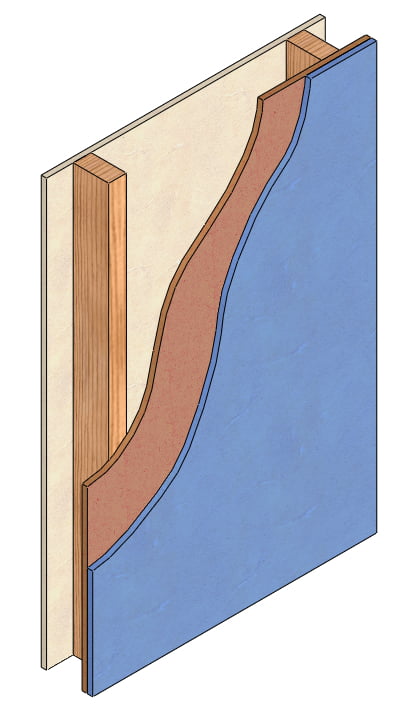
| Construction | Airborne Rw (Ctr) | Impact Ln,w |
|---|---|---|
| • 15mm Plasterboard | 50 (-5) dB | - |
| • 15mm PhoneStar TRI | ||
| • 100mm Timber Stud | ||
| • (No cavity insulation) | ||
| • 15mm Plasterboard |
For better results add:
- 100mm Mineral Wool Insulation (45 kg/m³) in Cavity
- 16mm Resilient Bars (RB1) on one side